
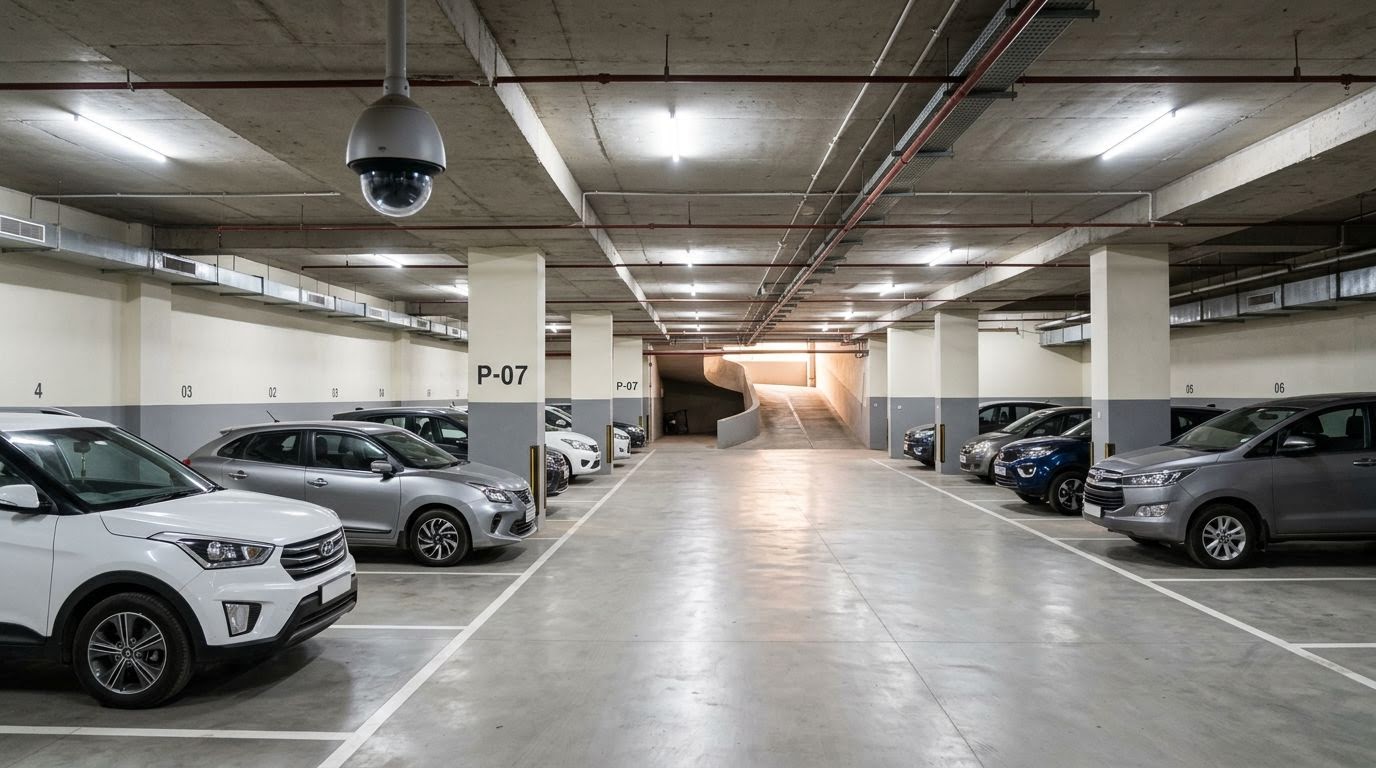
Securing your vehicle in apartment and basement parking requires a mix of physical locks, robust RWA security measures, and smart habits. Learn how to protect your car from theft.
Residential apartment complexes in Indian metro cities like Pune and Mumbai are seeing a massive surge in vehicle ownership. With outdoor space at a premium, housing societies rely heavily on multi-level basement parking and open society parking lots. While these areas offer convenience and shelter from the elements, they also present unique security challenges. Vehicle theft is rarely a crime of pure impulse; organized syndicates often target residential parking structures that exhibit weak security protocols. Protecting your asset requires a shared responsibility between individual vehicle owners and the Resident Welfare Association (RWA).
The Unique Security Challenges of Basement Parking
Underground and multi-level basement parkings are highly vulnerable zones if left unmonitored. Understanding these vulnerabilities is the first step toward building a robust defence against car theft prevention issues.
Poor Visibility and Blind Spots
Basements are naturally dark and filled with massive concrete pillars that support the building structure. These pillars create numerous blind spots where a thief can work on a vehicle's doors, locks, or ignition system without being easily spotted by passing residents or patrolling guards. Without high-lux lighting, these areas become ideal operating zones for criminals.
Weak Signal and Connectivity Issues
Many underground basements suffer from poor mobile network and Wi-Fi connectivity. This is a critical security gap, as it can delay the transmission of real-time alerts from smart car alarms, GPS trackers, or motion-detecting devices to the owner's smartphone. If a tracker cannot send an alert immediately, the window of opportunity to intercept the theft is lost.
Unmonitored Pedestrian Access Points
While vehicular entry points usually have some form of security, pedestrian access points to basements—such as fire exits, stairwells, and lift lobbies—are frequently left completely unsecured. Anyone can walk down a stairwell from the ground level or enter through an unlocked fire door, gain access to the vehicles, and exit without passing the main security gate.
Essential Physical Security Devices for Car Owners
Relying solely on your car's factory-fitted central locking system is no longer sufficient. Professional thieves use advanced electronic devices to bypass standard keyless entry systems. Layering physical security is the most effective way to deter them.
Mechanical Locks as a Visible Deterrent
Electronic keys can be bypassed using signal relay attacks, but heavy-duty mechanical locks remain a powerful physical and visual deterrent. Steering wheel locks, gear-shift locks, and heavy-duty tyre clamps require time, effort, and noisy power tools to break. A thief looking for a quick, silent getaway will almost always bypass a vehicle fitted with a visible steering or gear lock in favour of an easier target.
GPS Trackers and OBD Port Locks
Modern vehicles are equipped with an On-Board Diagnostics (OBD) port, usually located under the dashboard. Thieves often plug specialized diagnostic devices into this port to bypass the immobiliser and program a blank key fob within seconds. Installing a physical OBD port lock prevents unauthorized access to this port. Additionally, hiding a high-quality GPS tracker with an independent battery backup inside the vehicle allows you to track its location in real-time if it is towed or driven away.
Smart Car Alarms and Immobilisers
Ensure your vehicle is fitted with an engine immobiliser that prevents the engine from starting without the correct transponder key. Combining this with a motion-activated car alarm system will draw immediate attention in a quiet basement parking area, forcing the perpetrator to abandon the attempt.
Enhancing Infrastructure in Society Parking Lots
Individual vigilance must be supported by robust infrastructure managed by the housing society or RWA. A secure environment drastically reduces the likelihood of vehicle theft.
High-Lux Lighting and Strategic CCTV Placement
Dark corners must be completely eliminated. RWAs should install energy-efficient LED lighting that operates 24/7 in basement areas, ensuring there are no dark pockets. CCTV cameras must be positioned strategically to cover entry and exit ramps, lift lobbies, stairwells, and individual parking bays. Integrating these cameras with professional e-Surveillance Services ensures that feeds are monitored continuously and any unauthorized movement triggers an immediate alert.
Access Control and Physical Barriers
Unrestricted vehicular entry is a major security risk. Installing automated boom barriers integrated with RFID reader technology ensures that only registered resident vehicles can enter the parking zones. For visitors, a strict verification process must be implemented at the main gate, preventing unauthorized vehicles from entering the basement entirely.
The Role of Manned Guarding and Patrolling
Technology must always be backed by human intelligence and physical presence. Patrolling is an essential component of society parking security.
Regular Patrol Schedules and Guard Vigilance
Security personnel must conduct scheduled patrols of all parking levels, particularly during the vulnerable hours between midnight and 5:00 AM. Guards should be trained to look for unlocked vehicles, open windows, blinking dashboard lights indicating a triggered alarm, or individuals loitering near cars. Using guard patrolling systems (like RFID tag scanning along the patrol route) ensures that guards physically visit every corner of the basement at regular intervals.
Strict Visitor Management Protocols
No visitor vehicle should be allowed to park in resident parking zones. Security guards must log every visiting vehicle, note down its registration number, and verify the visitor's identity and destination with the resident via an intercom or visitor management app before raising the barrier. For comprehensive security management, employing professional, PSARA-licenced Security Services ensures that guards are properly trained in emergency response and visitor verification protocols.
Good Resident Habits to Prevent Vehicle Theft
Even the most advanced security systems can fail if residents do not practice basic security habits. Every car owner should incorporate these simple steps into their daily routine:
- Double-Check the Lock physically: Never assume your remote key has locked the door. Thieves sometimes use signal jammers in parking lots to block the locking signal. Always pull the door handle physically to confirm the car is locked before walking away.
- Keep Valuables Out of Sight: Laptops, mobile phones, bags, loose cash, or even expensive sunglasses left on the seats invite break-ins. If you must leave items in the car, lock them securely in the boot before arriving at your parking spot.
- Never Leave Spare Keys Inside: Avoid the temptation to leave a spare key in the glove compartment or magnetic key boxes hidden under the wheel arch. Thieves know exactly where to look.
- Park Strategically: If your society has open parking with unassigned slots, always choose well-lit areas close to the main security cabin, high-traffic walking paths, or directly under the field of view of a CCTV camera.
Society Parking Security Checklist for RWAs
RWAs should conduct regular audits of their parking areas to identify and rectify security loopholes. Use this checklist to evaluate your society's preparedness:
- Are all entry and exit ramps secured with functional boom barriers and RFID readers?
- Is the basement lighting bright enough to eliminate shadows behind concrete pillars?
- Are CCTV cameras installed at all pedestrian access points (stairwells, lift lobbies, fire exits)?
- Do security guards conduct physical patrols of the parking areas at least once every two hours during the night?
- Is there a strict visitor vehicle logging system in place at the main gate?
- Are residents encouraged to report suspicious individuals roaming the parking lots?
- Are fire exit doors equipped with one-way panic hardware to prevent external entry while allowing emergency exit?
Key Takeaways
- Layered Defence: Combine physical locks (steering/gear locks) with electronic security (GPS trackers, OBD locks) for maximum car theft prevention.
- Eliminate Blind Spots: RWAs must ensure continuous high-lux lighting and comprehensive CCTV coverage in basement parking areas.
- Access Control: Implement automated boom barriers and strict visitor verification to keep unauthorized vehicles out.
- Resident Vigilance: Physically verify that car doors are locked to counter key-fob signal jamming devices.
How STSS Can Help
S. Tiger Security Service (STSS) provides comprehensive, PSARA-compliant security solutions tailored for residential societies and commercial complexes in Pune and Mumbai. We offer professionally trained guarding personnel, state-of-the-art access control systems, and round-the-clock e-surveillance to keep your parking premises secure. Contact our team today to evaluate your society's security infrastructure or Request a security quotation.
Frequently Asked Questions
Can a thief bypass a factory-fitted engine immobiliser?
Yes. Modern thieves use electronic devices plugged into the vehicle's OBD port to bypass the immobiliser and program a new key fob. Installing a physical OBD port lock can prevent this access.
What is a relay attack, and how can I prevent it?
A relay attack involves thieves using wireless transmitters to capture the signal from your keyless entry fob inside your home and relaying it to your car parked outside. You can prevent this by storing your key fobs in a signal-blocking Faraday pouch.
How can our society prevent tailgating at the parking entrance?
Installing fast-acting automated boom barriers combined with RFID readers and loop detectors ensures that the barrier closes immediately after a authorized vehicle passes, preventing a second vehicle from tailgating.
What should I do immediately if my car is stolen from the society parking?
Immediately inform the society security desk and the local police by calling 112 or 100. File a First Information Report (FIR) at the nearest police station, notify your motor insurance provider, and request the RWA to preserve the CCTV footage of the entry and exit points during the estimated time of theft.
STSS provides trained guards, e-surveillance, access control and turnkey security across India.
This article was drafted with the help of an AI writing assistant and published by the STSS knowledge desk for general awareness only. It is not legal or professional advice. In an emergency, dial 112. Report cyber fraud on 1930 or cybercrime.gov.in.