
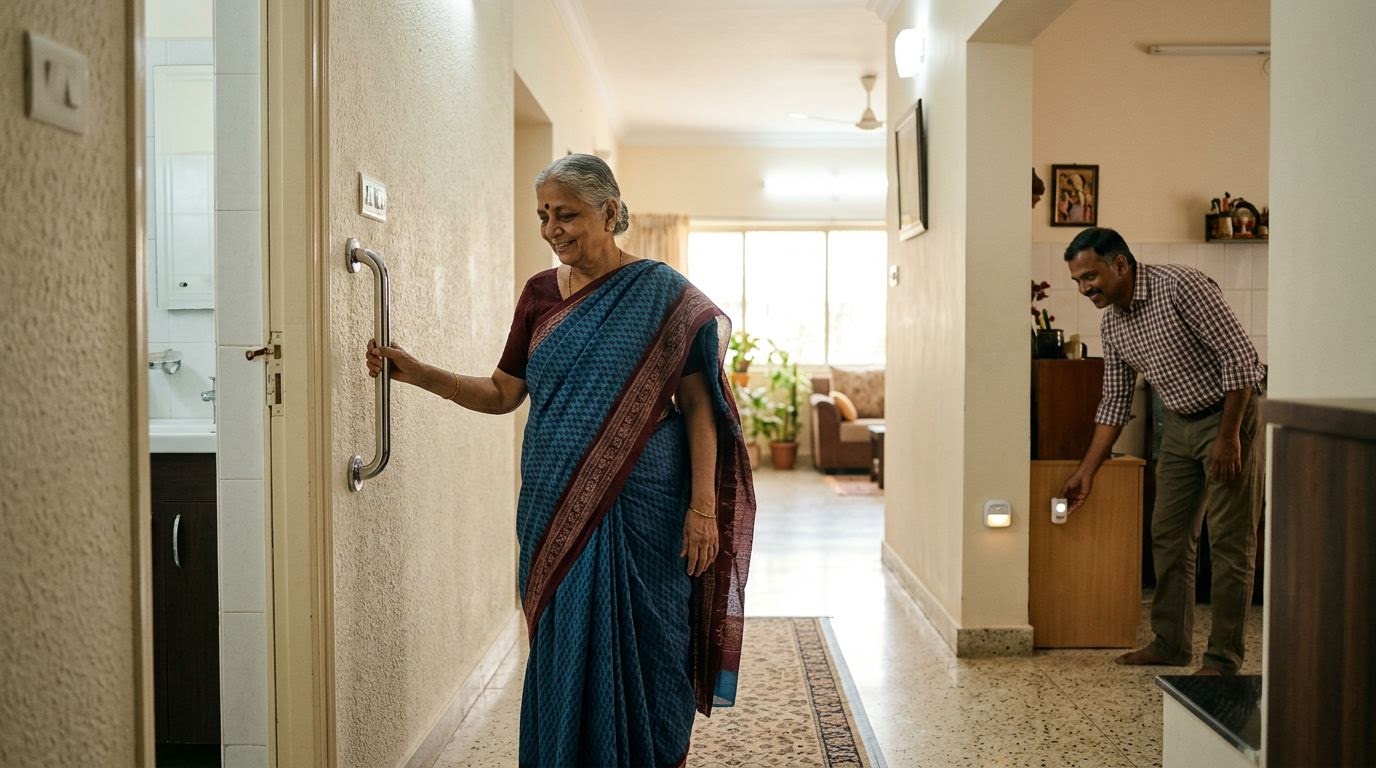
Fall prevention for elderly parents starts with simple, practical home modifications. Discover how lighting, grab bars, and layout changes can secure your home.
As our parents age, their desire for independence remains strong, yet their physical vulnerability naturally increases. In Indian households, where multi-generational living is common, or where elderly parents live independently in cities like Pune and Mumbai, ensuring their daily safety is a paramount responsibility. Falls are among the most common yet preventable causes of severe injury among senior citizens. A single slip on a polished bathroom tile or a trip over a loose rug can lead to fractures, loss of mobility, and a long-term decline in overall health. Fortunately, achieving effective fall prevention for elderly parents does not require major, expensive structural renovations. By focusing on practical senior home safety measures—such as installing grab bars, improving indoor lighting, and optimizing furniture layouts—you can create a secure environment that preserves their dignity and independence.
Understanding the Risk of Falls in Indian Homes
Many traditional Indian homes are designed with aesthetics in mind rather than accessibility. Polished marble, granite, or vitrified tiles are standard in living rooms, corridors, and bathrooms. While beautiful, these surfaces become incredibly slick when wet, dusty, or even polished.
Why Seniors are Vulnerable
Aging brings physiological changes that directly affect balance and mobility. Decreased muscle mass, stiff joints, reduced peripheral vision, and balance disorders make navigating a standard home challenging. Additionally, certain medications can cause temporary dizziness or drops in blood pressure. When combined with slippery floors or cluttered pathways, these factors significantly increase the risk of accidents.
The Importance of Proactive Prevention
Waiting for a minor slip to occur before taking action is a risky approach. Proactive fall prevention for elderly parents is an ongoing process of assessing the home environment and making incremental changes. By addressing hazards before they cause harm, you protect your parents from the physical trauma and emotional stress associated with a loss of independence.
Bathroom Modifications: The Critical Zone
The bathroom is statistically the most hazardous room in any household for senior citizens. Water, soap, and hard, unforgiving surfaces combine to create a high-risk environment that requires immediate attention.
Installing Heavy-Duty Grab Bars
Standard towel racks, shower curtain rods, or wall-mounted soap holders are not designed to support a person's body weight. If a senior loses balance, grabbing these items can cause them to break off, leading to a more severe fall. High-quality, professional-grade grab bars must be securely anchored into the bathroom walls. Ideally, these should be installed in two key locations: next to the toilet seat to assist with sitting and standing, and inside the shower or bathing area. Look for rust-resistant stainless steel grab bars with textured surfaces that provide a firm grip even when wet.
Non-Slip Mats and Flooring Treatments
Smooth bathroom tiles should be treated with anti-skid coatings or covered with high-quality rubber non-slip mats. When selecting mats, ensure they have strong suction cups on the underside to keep them firmly in place. These mats should be cleaned regularly to prevent the buildup of soap scum and mildew, which can make the surface slippery.
Raised Toilet Seats and Shower Chairs
Bending down to use a low western toilet or attempting to squat can strain aging joints and cause dizziness upon standing. Installing a raised toilet seat with integrated side handles makes sitting and standing much easier. Similarly, placing a sturdy, slip-resistant shower chair in the bathing area allows seniors to bathe safely while seated, eliminating the need to balance on one foot while washing.
Lighting Up the Pathways
Poor visibility is a major contributor to falls, particularly during late-night or early-morning hours. As eye health declines with age, seniors require significantly more light to see clearly and judge distances accurately compared to younger adults.
Eliminating Dark Corridors
Ensure that all hallways, staircases, and transitions between rooms are brightly lit. Installing plug-in motion-sensor night lights along the path from the bedroom to the bathroom is an exceptionally effective way to ensure they never have to navigate in the dark. These sensors automatically illuminate the pathway when movement is detected and turn off after a few minutes, conserving energy.
Bedside Access to Light
Your parents should never have to walk in the dark to find a light switch. Place a bedside lamp within easy arm's reach of the bed, or install two-way switches that allow them to turn on the main bedroom light before getting out of bed. Smart bulbs controlled by voice assistants or remote controls are also excellent modern solutions that enhance senior home safety.
Flooring and Furniture Layout Adjustments
The layout of your living room and common areas plays a massive role in overall safety. A cluttered room with narrow walkways is an accident waiting to happen.
Decluttering Walkways
Create wide, unobstructed pathways through every room in the house. Remove low coffee tables, footstools, decorative floor vases, and electrical cords from walking paths. Ensure that telephone, television, and internet cables are securely tacked along the walls and never run across a doorway or under a carpet.
Securing Rugs and Carpets
Loose rugs and traditional "durries" are major tripping hazards. If they cannot be removed entirely, secure them to the floor using heavy-duty double-sided carpet tape or place non-slip rubber underlays beneath them. Pay special attention to the edges; curled corners should be flattened or replaced immediately.
Furniture Height and Stability
Seniors should sit on chairs and sofas that are firm and high enough to get out of easily. Deep, soft sofas that sink are incredibly difficult for elderly parents to stand up from without losing balance. Ensure dining and lounge chairs have sturdy armrests to provide leverage when standing.
Bedroom and Kitchen Safety Upgrades
Daily routines in the bedroom and kitchen should be simplified to minimise stretching, bending, and reaching.
Bedroom Safety
The bed height should be adjusted so that when your parent sits on the edge, their feet rest flat on the floor, and their knees are bent at a 90-degree angle. A bed that is too high or too low makes transferring difficult. Keep essential items like glasses, water bottles, mobile phones, and emergency contact lists on a sturdy bedside table.
Kitchen Accessibility
In Indian kitchens, heavy spice jars, utensils, and daily ingredients are often stored in high overhead cabinets or low under-counter drawers. Reorganise the kitchen to place frequently used items on counter-level shelves. This eliminates the need for your parents to climb on step stools or bend down deeply, both of which can cause loss of balance.
Daily Habits and Footwear
Environmental changes must be paired with safe daily habits to maximize fall prevention for elderly parents.
Safe Footwear Indoors
Walking barefoot or in loose slip-on slippers (hawai chappals) inside the house increases the risk of slipping. Encourage your parents to wear well-fitting, lightweight indoor shoes or slippers with non-slip rubber soles and closed backs. Avoid loose socks on smooth tile floors.
Slow Transitions
Many falls occur due to orthostatic hypotension—a sudden drop in blood pressure when standing up quickly. Teach your parents to sit on the edge of the bed or chair for a minute before standing up, allowing their body to adjust.
Senior Home Safety Audit Checklist
Use this practical checklist to walk through your parents' home and identify potential hazards:
- Are all walkways clear of clutter, electrical cords, and low furniture?
- Are there sturdy grab bars installed near the toilet and shower?
- Do all rugs have non-slip backings or double-sided tape?
- Are the stairs well-lit and fitted with secure handrails on both sides?
- Are night lights installed in the hallways and bathroom?
- Are frequently used kitchen items stored at waist level?
- Is there a sturdy chair with armrests in the living room?
- Are the indoor slippers worn by your parents closed-back and slip-resistant?
Key Takeaways
- Secure the Bathroom: Install heavy-duty, wall-anchored grab bars and use non-slip mats with suction cups to prevent slips in wet areas.
- Brighten the Paths: Use motion-sensor night lights in hallways and ensure easy bedside access to lighting.
- Clear the Walkways: Remove loose rugs, low furniture, and exposed electrical cords from all walking paths.
- Choose Firm Furniture: Ensure chairs and sofas are firm with sturdy armrests to make sitting and standing safer.
- Promote Safe Habits: Encourage closed-back, non-slip indoor footwear and slow transitions when standing up.
- Emergency Readiness: Keep emergency numbers like 112 on speed dial and place phones within easy reach.
How STSS Can Help
At STSS, we understand that physical security goes hand-in-hand with safety inside the home. Through our comprehensive Integrated Facility Management solutions, we help housing societies and residential complexes maintain safe, well-lit, and hazard-free common areas. Additionally, our advanced e-Surveillance Services can assist in setting up indoor monitoring systems that allow you to keep a watchful eye on your elderly parents' well-being remotely. To find out how we can help secure your residential community or home, Request a security quotation today.
Frequently Asked Questions
Where is the most important place to install grab bars for elderly parents?
The most critical areas are inside the shower or bathing zone and directly next to the toilet seat, as these are the spots where seniors experience the most transitions in balance and posture.
Can I use standard adhesive hooks or towel racks as grab bars?
No. Standard towel racks and adhesive hooks are not designed to support body weight. True grab bars must be heavy-duty, slip-resistant, and securely anchored into the wall using screws and wall plugs.
What type of flooring is safest for senior citizens at home?
Matte-finish, slip-resistant ceramic or vitrified tiles are ideal. If you have polished marble or granite, it is best to treat them with anti-skid coatings or cover high-traffic areas with secured non-slip mats.
How does lighting help in preventing falls among the elderly?
Aging eyes require more light to distinguish depth and obstacles. Bright, glare-free lighting and motion-sensor night lights along corridors eliminate dark patches, helping seniors navigate safely at night.
What should we do in case of an emergency fall?
Keep emergency contacts and the national emergency number 112 on speed dial. Ensure your parents have a mobile phone or a wearable emergency alert button with them at all times.
STSS provides trained guards, e-surveillance, access control and turnkey security across India.
This article was drafted with the help of an AI writing assistant and published by the STSS knowledge desk for general awareness only. It is not legal or professional advice. In an emergency, dial 112. Report cyber fraud on 1930 or cybercrime.gov.in.